

Critiques

Ce premier défilé Gucci par Demna est intéressant dans la manière dont il réactive l’héritage Tom Ford plutôt que celui d’Alessandro Michele. Là où Michele avait transformé Gucci en cabinet de curiosités baroque et maximaliste, Demna revient à une idée plus directe du désir : le sexe, le glamour, la tension corporelle. Une sensualité presque agressive, très années 1990-2000.
Dès l’ouverture, la minirobe blanche évoque immédiatement Sharon Stone dans Basic Instinct : une féminité froide, contrôlée, dangereuse. Cette référence n’est pas anodine. Basic Instinct représente un moment précis de la culture visuelle où le luxe, l’érotisme et le pouvoir deviennent indissociables. Tom Ford avait parfaitement compris cette esthétique lorsqu’il relance Gucci dans les années 1990 avec son porno chic ultra stylisé : robes coupées au ras du corps, chemises ouvertes jusqu’au nombril, silhouettes huilées, sensualité clinique.
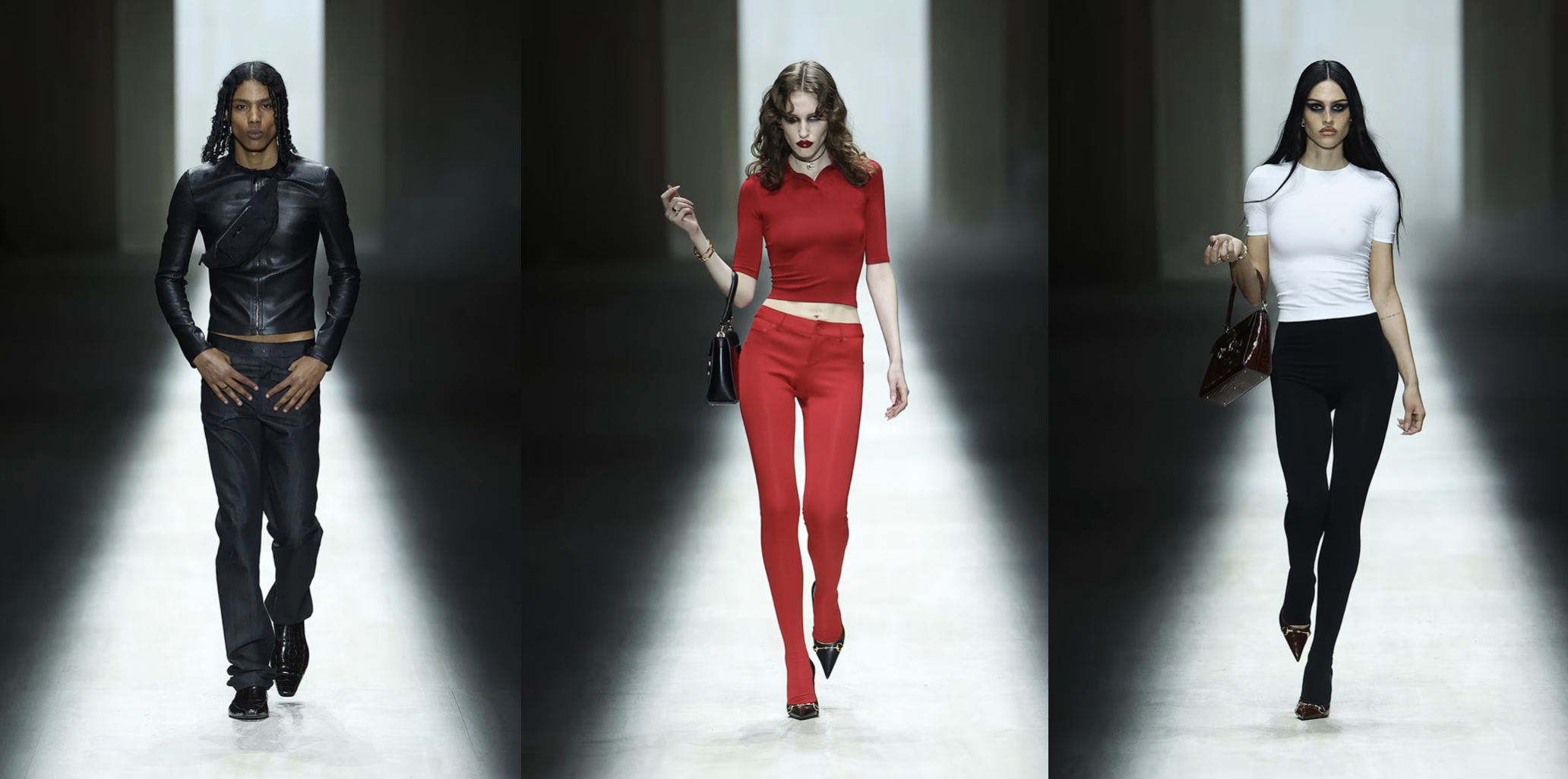
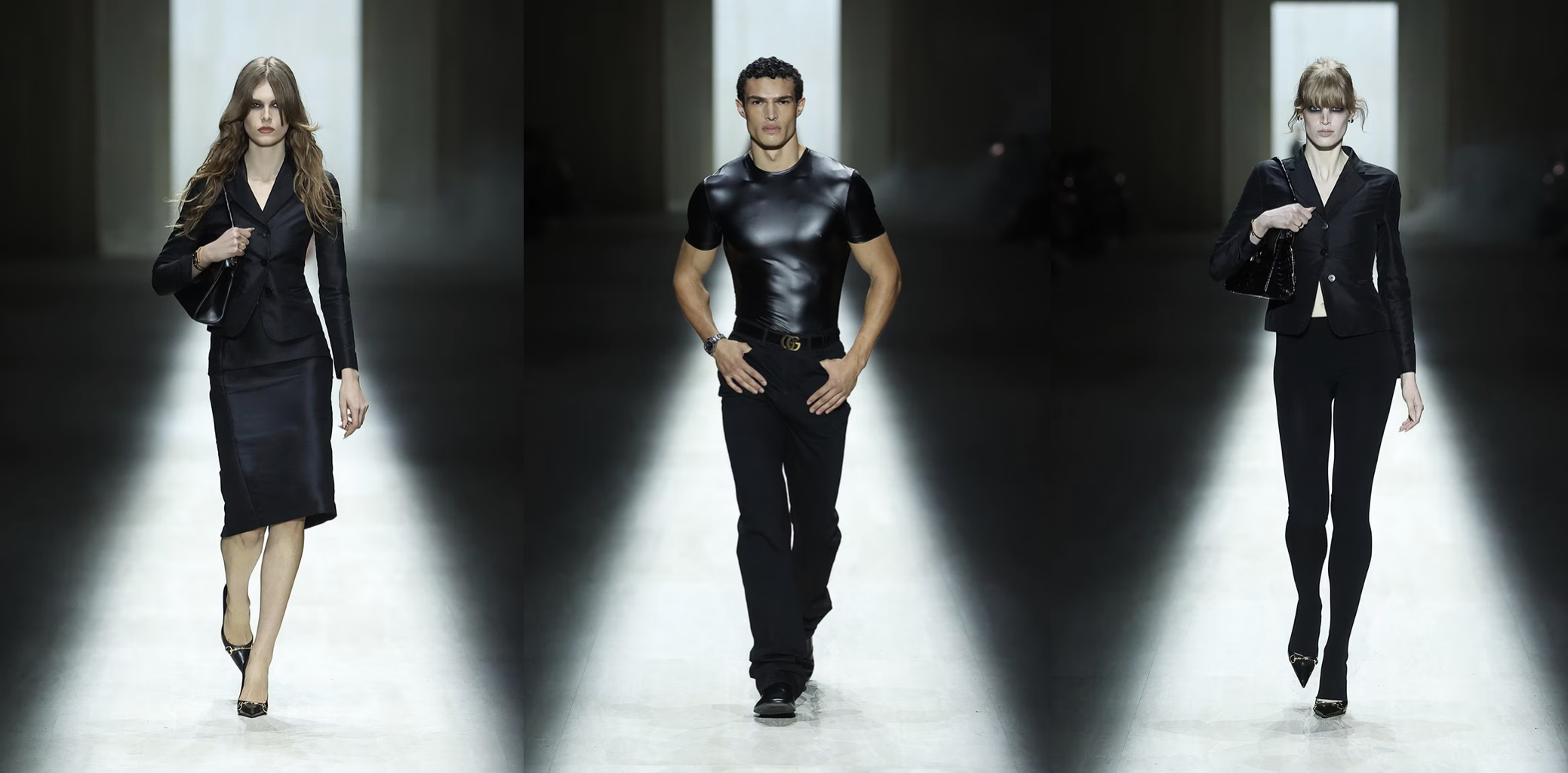
Demna reprend ce vocabulaire mais le débarrasse du fétichisme rétro. Chez lui, le glamour Fordien devient plus sec, plus contemporain, presque post-réseaux sociaux. Les corps sont moulés, exhibés, mais sans nostalgie. Les hommes portent des pantalons et tops si ajustés qu’ils transforment le corps masculin en objet de spectacle, renouant avec cette figure du “himbo” — le beau gosse hypersexualisé, conscient de son apparence, entre virilité et superficialité.
Le casting lui-même traduit ce changement. Exit les silhouettes « anti-fashion » qu’il affectionnait chez Balenciaga. Demna convoque ici des figures glamour : Kate Moss, Emily Ratajkowski, Mariacarla Boscono. Le final avec Kate Moss dans la robe-string imaginée par Tom Ford agit presque comme une déclaration programmatique : Demna ne veut pas déconstruire Gucci, il veut réactiver sa machine fantasmatique.
Le plus intéressant est peut-être là : contrairement à son travail chez Balenciaga, souvent basé sur l’ironie, la distance ou la critique sociale, ce premier Gucci semble vouloir produire une sensation immédiate. Demna le dit lui-même : il ne cherche pas une approche intellectuelle, mais une émotion physique. Le vêtement doit redevenir un instrument de désir avant d’être un commentaire sur le désir.
En ce sens, ce défilé marque peut-être un déplacement important dans son travail : moins de second degré, moins de sociologie visible, davantage de fantasme pur. Comme si Demna abandonnait momentanément l’analyse du monde contemporain pour revenir à quelque chose de plus simple et plus brutal : rendre Gucci sexy à nouveau.
À une silhouette près. Parce que Demna travaille presque toujours sur la mode comme sociologie visuelle. Cette silhouette-là — le mec de banlieue en slim foncé, t-shirt moulant, sac Gucci crossbody, veste sur les épaules, coupe ultra courte — n’est pas un hasard : c’est une figure extrêmement identifiable en Europe, surtout en France, Belgique, Italie, UK.
Demna ne crée pas simplement des vêtements. Il crée des figures sociales. Des silhouettes immédiatement reconnaissables, presque caricaturales, qui condensent une époque, une classe, une manière de se tenir, de désirer, de consommer. Chez Gucci, cette figure du « mec de banlieue » devient l’un de ses personnages les plus révélateurs.
Le look est précis : jean slim foncé, t-shirt moulant, petite sacoche Gucci portée en travers du torse, veste jetée sur les épaules, barbe nette, regard fermé. En quelques secondes, toute une géographie sociale apparaît. On pense aux centres commerciaux, aux stations-service, aux boîtes de nuit de périphérie, aux selfies Facebook des années 2010, aux économies faites pendant des mois pour acheter une pièce de luxe. Cette silhouette existe déjà dans la rue ; Demna ne l’invente pas, il la prélève.
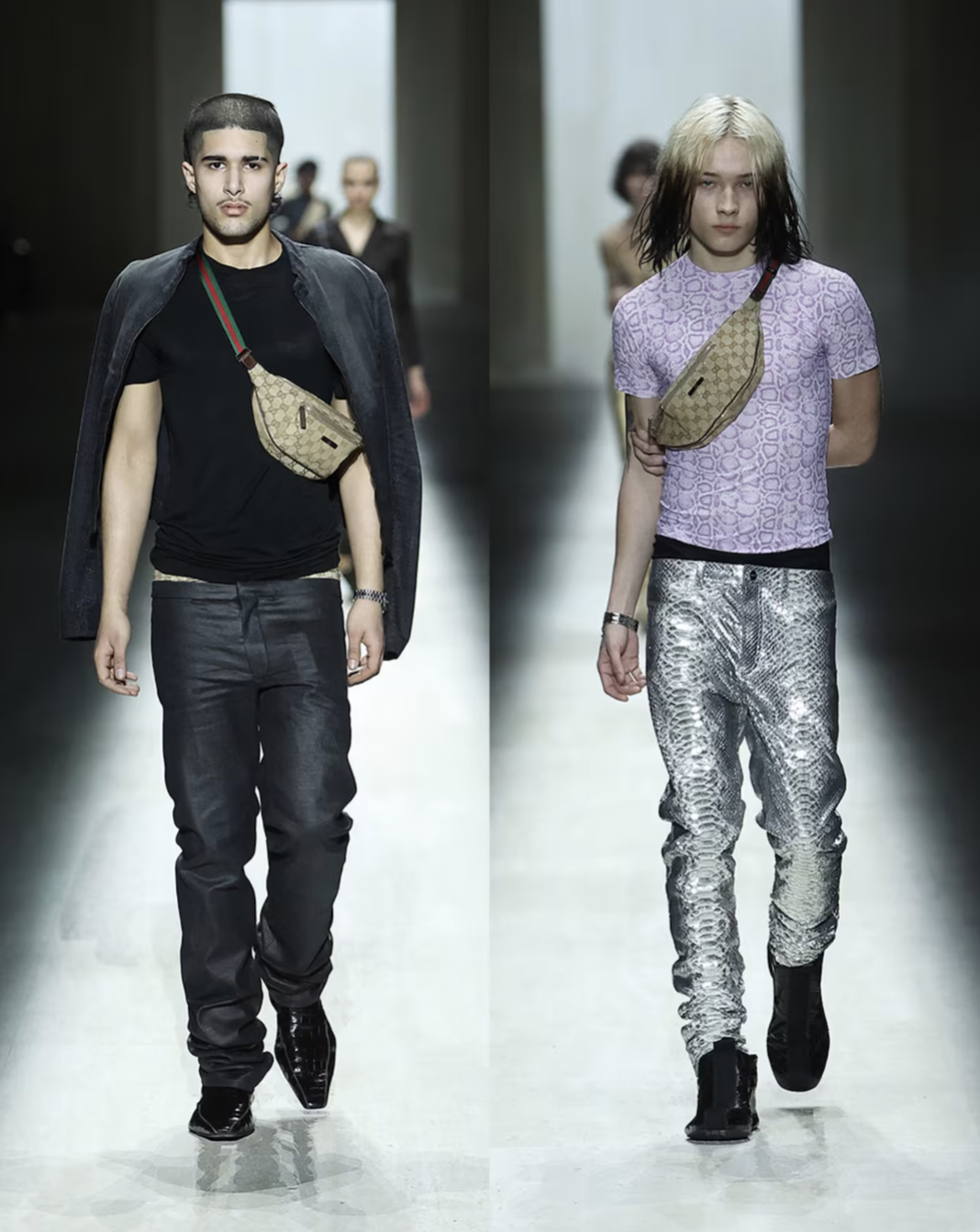
Ce qui est intéressant, c’est la tension entre le luxe et l’aspiration sociale. Gucci a toujours été une marque ambiguë : à la fois aristocratique et ostentatoire, liée autant à la bourgeoisie italienne qu’aux cultures populaires, au rap, au football, aux nouveaux riches, aux imaginaires de réussite visibles. Demna pousse cette ambiguïté jusqu’au bout. Il fait entrer dans le défilé les clients que la mode regarde souvent avec condescendance tout en vivant de leur désir.
Cette silhouette dérange parce qu’elle brouille les hiérarchies habituelles du bon goût. Le luxe contemporain aime se présenter comme discret, cultivé, “old money”. Demna fait exactement l’inverse : il remet au centre une esthétique jugée excessive, trop visible, trop masculine, trop populaire. Il transforme des signes perçus comme vulgaires en langage de mode légitime.
Mais son travail reste volontairement ambigu. Est-ce une célébration de ces figures sociales ? Une satire ? La réponse n’est jamais claire. C’est précisément dans cette zone de malaise que son travail prend forme. Demna observe la manière dont les gens utilisent les marques de luxe comme des armures sociales, des outils de projection, parfois même comme des protections symboliques contre l’effacement.
Ce « mec de banlieue » n’est donc pas seulement un personnage de mode. C’est une image de notre époque : une époque où le luxe circule partout, où les frontières de classe deviennent visuelles, où l’identité se construit à travers des logos, des postures et des signes immédiatement lisibles. Demna transforme cette réalité en archétype — brutal, reconnaissable, impossible à ignorer.
Son travail peut être lu à travers la notion de distinction développée par Pierre Bourdieu. Le goût n’est jamais neutre : il sert à produire des hiérarchies sociales. Ce qui est considéré comme élégant, raffiné ou vulgaire dépend toujours d’un rapport de classe. En introduisant dans le défilé des silhouettes associées aux cultures populaires ou périphériques, Demna attaque précisément cette frontière symbolique entre le bon goût bourgeois et les esthétiques jugées excessives ou illégitimes. Il transforme des signes considérés comme vulgaires — logos voyants, silhouettes de nightlife, masculinité ostentatoire — en objets de désir haute couture.
Mais il ne s’agit pas seulement de sociologie. Il y a chez Demna une forme de réalisme presque baudrillardien. Jean Baudrillard expliquait que la société contemporaine fonctionne à travers des signes et des simulacres : nous consommons moins des objets que des images sociales. Le luxe n’est plus uniquement une question de qualité matérielle ; il devient une performance visible de statut, une projection identitaire. La petite sacoche Gucci portée comme une armure sur le torse agit alors comme un signe pur : elle dit immédiatement quelque chose du désir, de la réussite, de la masculinité, de l’appartenance sociale. Demna simplifie les codes jusqu’à produire une image iconique, à la frontière entre le mème internet, le cliché social et la figure mythologique moderne.
Ce qui rend son travail inconfortable, c’est que son regard demeure profondément ambigu. On ne sait jamais s’il célèbre ces figures ou s’il les expose avec ironie. On hésite : est-ce une réhabilitation des cultures populaires ou une mise en scène cynique du mauvais goût ? Peut être les deux ?
Cette hésitation est essentielle. Demna travaille précisément dans cette zone où le luxe rencontre la honte sociale, où le désir de distinction devient visible, parfois brutalement visible. Ses défilés montrent un monde dans lequel les identités se construisent à travers des marques, des postures et des signes immédiatement reconnaissables. Le « mec de banlieue » n’est donc pas seulement une silhouette de mode : c’est une figure politique de notre époque, un symptôme visuel des tensions entre classe, désir, visibilité et reconnaissance.
VIDÉO


This first Gucci show by Demna is interesting in the way it reactivates the Tom Ford legacy rather than that of Alessandro Michele. Where Michele had transformed Gucci into a baroque and maximalist cabinet of curiosities, Demna returns to a more direct idea of desire: sex, glamour, bodily tension. An almost aggressive sensuality, very much of the 1990s and 2000s.
From the opening, the white minidress immediately evokes Sharon Stone in Basic Instinct: a cold, controlled, dangerous femininity. This reference is not insignificant. Basic Instinct represents a specific moment in visual culture where luxury, eroticism, and power become inseparable. Tom Ford perfectly understood this aesthetic when he relaunched Gucci in the 1990s with his ultra-stylized porn chic: dresses cut close to the body, shirts open to the navel, oiled silhouettes, clinical sensuality. Demna takes up this vocabulary but strips it of its retro fetishism. In his work, Fordian glamour becomes drier, more contemporary, almost post-social media. Bodies are sculpted, displayed, but without nostalgia. Men wear pants and tops so tight they transform the male body into an object of spectacle, reviving the figure of the “himbo”—the hypersexualized, handsome man, aware of his appearance, poised between virility and superficiality.
The casting itself reflects this change. Gone are the “anti-fashion” silhouettes he favored at Balenciaga. Here, Demna summons glamorous figures: Kate Moss, Emily Ratajkowski, Mariacarla Boscono. The finale with Kate Moss in the thong dress designed by Tom Ford acts almost as a programmatic statement: Demna doesn’t want to deconstruct Gucci; he wants to reactivate its fantasy machine.
Perhaps the most interesting aspect lies here: unlike his work at Balenciaga, often based on irony, detachment, or social commentary, this first Gucci show seems to aim for an immediate sensation. Demna himself says he’s not seeking an intellectual approach, but a physical emotion. Clothing must once again become an instrument of desire before it becomes a commentary on desire.
In this sense, this show perhaps marks a significant shift in his work: less irony, less overt sociology, more pure fantasy. As if Demna were momentarily abandoning the analysis of the contemporary world to return to something simpler and more raw: making Gucci sexy again.
Except for one silhouette. Because Demna almost always approaches fashion as visual sociology. This particular silhouette—the suburban guy in dark skinny jeans, a tight t-shirt, a Gucci crossbody bag, a jacket draped over his shoulders, and an ultra-short haircut—is no accident: it’s an extremely recognizable figure in Europe, especially in France, Belgium, Italy, and the UK.
Demna doesn’t simply create clothes. He creates social figures. Instantly recognizable, almost caricatured silhouettes that encapsulate an era, a class, a way of carrying oneself, desiring, and consuming. At Gucci, this figure of the “suburban customer” becomes one of his most revealing characters.
The look is precise: dark slim jeans, a tight t-shirt, a small Gucci bag worn across the chest, a jacket draped over the shoulders, a neatly trimmed beard, and a closed gaze. In a few seconds, an entire social geography emerges. We think of shopping malls, gas stations, suburban nightclubs, Facebook selfies from the 2010s, and months of saving up to buy a luxury item. This silhouette already exists on the street; Demna doesn’t invent it, he extracts it.
What’s interesting is the tension between luxury and social aspiration. Gucci has always been an ambiguous brand: both aristocratic and ostentatious, linked as much to the Italian bourgeoisie as to popular culture, rap, football, the nouveau riche, and the imaginary of visible success. Demna pushes this ambiguity to its extreme. He brings into the show the very customers whom the fashion world often regards with condescension, while simultaneously profiting from their desires.
This silhouette is unsettling because it blurs the usual hierarchies of good taste. Contemporary luxury likes to present itself as discreet, cultured, “old money.” Demna does the exact opposite: he puts back at the center an aesthetic deemed excessive, too visible, too masculine, too popular. He transforms signs perceived as vulgar into the language of legitimate fashion.
But his work remains deliberately ambiguous. Is it a celebration of these social figures? A satire? The answer is never clear. It is precisely in this zone of unease that his work takes shape. Demna observes how people use luxury brands as social armor, tools for self-projection, and sometimes even as symbolic protection against erasure.
This “suburban customer” is therefore not merely a fashion figure. He is an image of our time: an era where luxury circulates everywhere, where class boundaries become visual, where identity is constructed through logos, poses, and immediately legible signs. Demna transforms this reality into an archetype—brutal, recognizable, impossible to ignore.
His work can be interpreted through the lens of the concept of distinction developed by Pierre Bourdieu. Taste is never neutral: it serves to produce social hierarchies. What is considered elegant, refined, or vulgar always depends on a class relationship. By introducing silhouettes associated with popular or peripheral cultures into the runway, Demna precisely attacks this symbolic boundary between bourgeois good taste and aesthetics deemed excessive or illegitimate. He transforms signs considered vulgar—flashy logos, nightlife silhouettes, ostentatious masculinity—into objects of haute couture desire.
But it’s not just about sociology. There’s a kind of almost Baudrillardian realism in Demna’s work. Jean Baudrillard explained that contemporary society functions through signs and simulacra: we consume social images more than objects. Luxury is no longer solely a matter of material quality; it becomes a visible performance of status, a projection of identity. The small Gucci bag worn like armor on the chest then acts as a pure sign: it immediately conveys something about desire, success, masculinity, and social belonging. Demna simplifies the codes to the point of producing an iconic image, straddling the line between internet meme, social cliché, and modern mythological figure.
What makes his work unsettling is that his gaze remains profoundly ambiguous. We never know if he’s celebrating these figures or presenting them ironically. We hesitate: is it a rehabilitation of popular culture or a cynical staging of bad taste? Or both ?
This hesitation is essential. Demna works precisely in this zone where luxury meets social shame, where the desire for distinction becomes visible, sometimes brutally so. His shows depict a world in which identities are constructed through brands, poses, and immediately recognizable symbols. The “suburban Gucci customer” is therefore not merely a fashion silhouette: he is a political figure of our time, a visual symptom of the tensions between class, desire, visibility, and recognition.
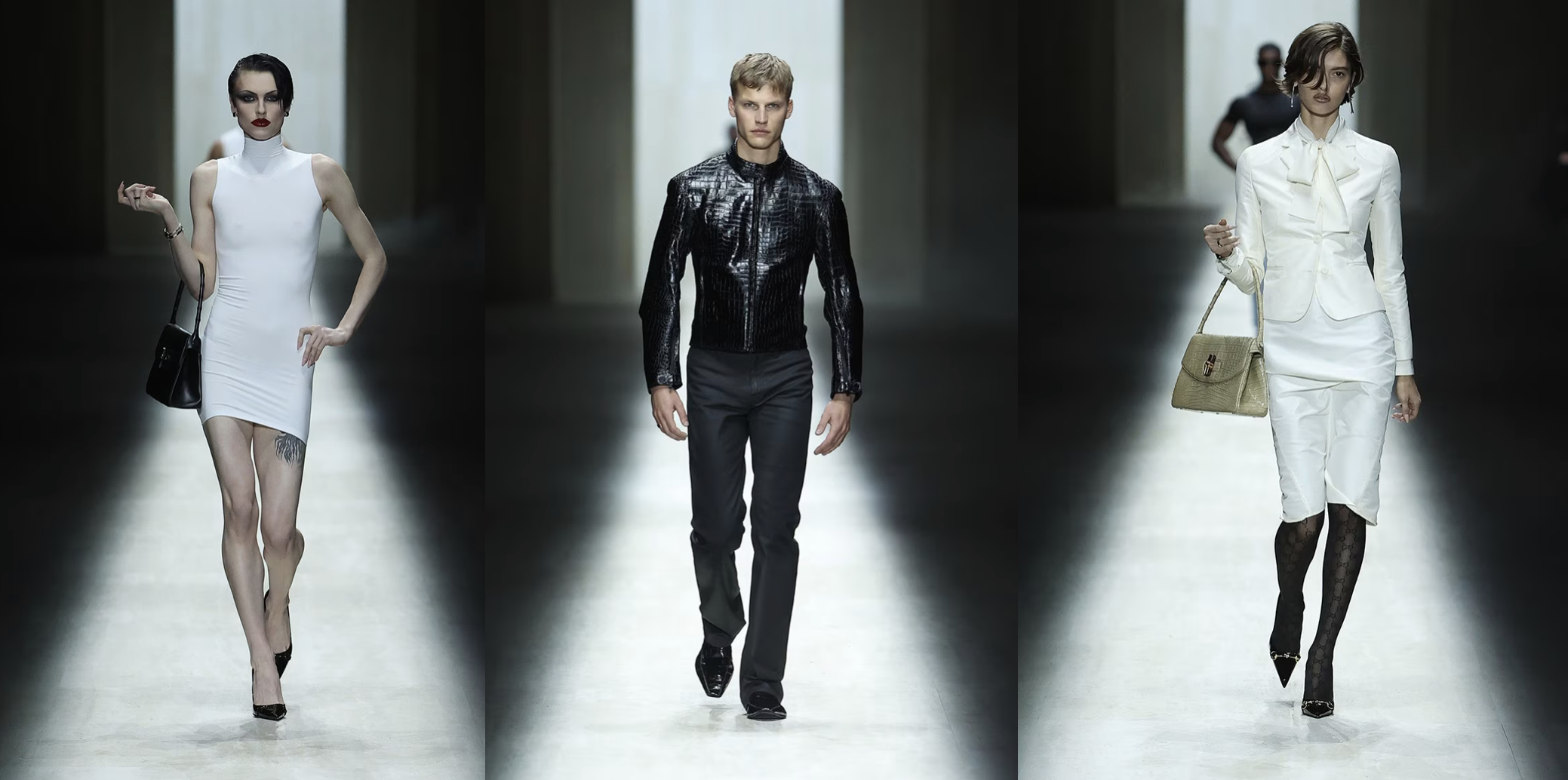
The casting itself reflects this change. Gone are the “anti-fashion” silhouettes he favored at Balenciaga. Here, Demna summons glamorous figures: Kate Moss, Emily Ratajkowski, Mariacarla Boscono. The finale with Kate Moss in the thong dress designed by Tom Ford acts almost as a programmatic statement: Demna doesn’t want to deconstruct Gucci; he wants to reactivate its fantasy machine.
Perhaps the most interesting aspect lies here: unlike his work at Balenciaga, often based on irony, detachment, or social commentary, this first Gucci show seems to aim for an immediate sensation. Demna himself says he’s not seeking an intellectual approach, but a physical emotion. Clothing must once again become an instrument of desire before it becomes a commentary on desire.
In this sense, this show perhaps marks a significant shift in his work: less irony, less overt sociology, more pure fantasy. As if Demna were momentarily abandoning the analysis of the contemporary world to return to something simpler and more raw: making Gucci sexy again.
Except for one silhouette. Because Demna almost always approaches fashion as visual sociology. This particular silhouette—the suburban guy in dark skinny jeans, a tight t-shirt, a Gucci crossbody bag, a jacket draped over his shoulders, and an ultra-short haircut—is no accident: it’s an extremely recognizable figure in Europe, especially in France, Belgium, Italy, and the UK.
Demna doesn’t simply create clothes. He creates social figures. Instantly recognizable, almost caricatured silhouettes that encapsulate an era, a class, a way of carrying oneself, desiring, and consuming. At Gucci, this figure of the “suburban customer” becomes one of his most revealing characters.
The look is precise: dark slim jeans, a tight t-shirt, a small Gucci bag worn across the chest, a jacket draped over the shoulders, a neatly trimmed beard, and a closed gaze. In a few seconds, an entire social geography emerges. We think of shopping malls, gas stations, suburban nightclubs, Facebook selfies from the 2010s, and months of saving up to buy a luxury item. This silhouette already exists on the street; Demna doesn’t invent it, he extracts it.
What’s interesting is the tension between luxury and social aspiration. Gucci has always been an ambiguous brand: both aristocratic and ostentatious, linked as much to the Italian bourgeoisie as to popular culture, rap, football, the nouveau riche, and the imaginary of visible success. Demna pushes this ambiguity to its extreme. He brings into the show the very customers whom the fashion world often regards with condescension, while simultaneously profiting from their desires.
This silhouette is unsettling because it blurs the usual hierarchies of good taste. Contemporary luxury likes to present itself as discreet, cultured, “old money.” Demna does the exact opposite: he puts back at the center an aesthetic deemed excessive, too visible, too masculine, too popular. He transforms signs perceived as vulgar into the language of legitimate fashion.
But his work remains deliberately ambiguous. Is it a celebration of these social figures? A satire? The answer is never clear. It is precisely in this zone of unease that his work takes shape. Demna observes how people use luxury brands as social armor, tools for self-projection, and sometimes even as symbolic protection against erasure.
This “suburban customer” is therefore not merely a fashion figure. He is an image of our time: an era where luxury circulates everywhere, where class boundaries become visual, where identity is constructed through logos, poses, and immediately legible signs. Demna transforms this reality into an archetype—brutal, recognizable, impossible to ignore.
His work can be interpreted through the lens of the concept of distinction developed by Pierre Bourdieu. Taste is never neutral: it serves to produce social hierarchies. What is considered elegant, refined, or vulgar always depends on a class relationship. By introducing silhouettes associated with popular or peripheral cultures into the runway, Demna precisely attacks this symbolic boundary between bourgeois good taste and aesthetics deemed excessive or illegitimate. He transforms signs considered vulgar—flashy logos, nightlife silhouettes, ostentatious masculinity—into objects of haute couture desire.
But it’s not just about sociology. There’s a kind of almost Baudrillardian realism in Demna’s work. Jean Baudrillard explained that contemporary society functions through signs and simulacra: we consume social images more than objects. Luxury is no longer solely a matter of material quality; it becomes a visible performance of status, a projection of identity. The small Gucci bag worn like armor on the chest then acts as a pure sign: it immediately conveys something about desire, success, masculinity, and social belonging. Demna simplifies the codes to the point of producing an iconic image, straddling the line between internet meme, social cliché, and modern mythological figure.
What makes his work unsettling is that his gaze remains profoundly ambiguous. We never know if he’s celebrating these figures or presenting them ironically. We hesitate: is it a rehabilitation of popular culture or a cynical staging of bad taste? Or both ?
This hesitation is essential. Demna works precisely in this zone where luxury meets social shame, where the desire for distinction becomes visible, sometimes brutally so. His shows depict a world in which identities are constructed through brands, poses, and immediately recognizable symbols. The “suburban Gucci customer” is therefore not merely a fashion silhouette: he is a political figure of our time, a visual symptom of the tensions between class, desire, visibility, and recognition.

Laissez un commentaire